Babel Street Border Screening
Strengthen point-of-entry security with faster, automated risk assessment. Agencies can quickly identify high-risk travelers, cargo, and networks while improving compliance and accelerating trusted traveler processing. Designed for the complex needs of border security agencies, Babel Street supports traveler and cargo screening, visa and trusted traveler vetting, and verification of migrant and refugee backgrounds.
Intelligent borders secure the world

Multi-Language Smart Search
Expands every search to add slang and synonyms across multiple languages with on-demand translation of results

Automated Bulk Data Enrichment
Process massive volumes of unstructured text by extracting locations, analyzing sentiments, classifying topics, and detecting violent intent

Entity Resolution
Highly accurate and customizable entity extraction, linking, and disambiguation capabilities detect specific events and relationships within unstructured text

Safe, Anonymous Web Research
Conduct online research with a localized perspective in a secure environment for managing online appearance, overcoming IP bias, and safely accessing files

Social Media Network and Influencer Analysis
From keywords or a few accounts, map the social media network of a topic or group and identify the key influencers within minutes

Cross-lingual Matching
Matches names of people and organizations, dates, and addresses across languages and scripts, for unambiguous comparison with watchlists and databases
See it in action

Use Case
Using Babel Street in the Fight Against Counterfeit Goods
How Babel Street helps detect and prevent illicit trade of counterfeit goods.

Case Study
Babel Street Strengthens Denied Party Screening for Global Shipper
How a global shipper uses Babel Street Name Translator to increase accuracy and matching of non-Latin script names

Case Study
Enabling Stronger, Safer Borders with AI-powered Screening by Babel Street
How a major border security agency used Babel Street to help process hundreds of thousands of international travelers daily.
Case Study
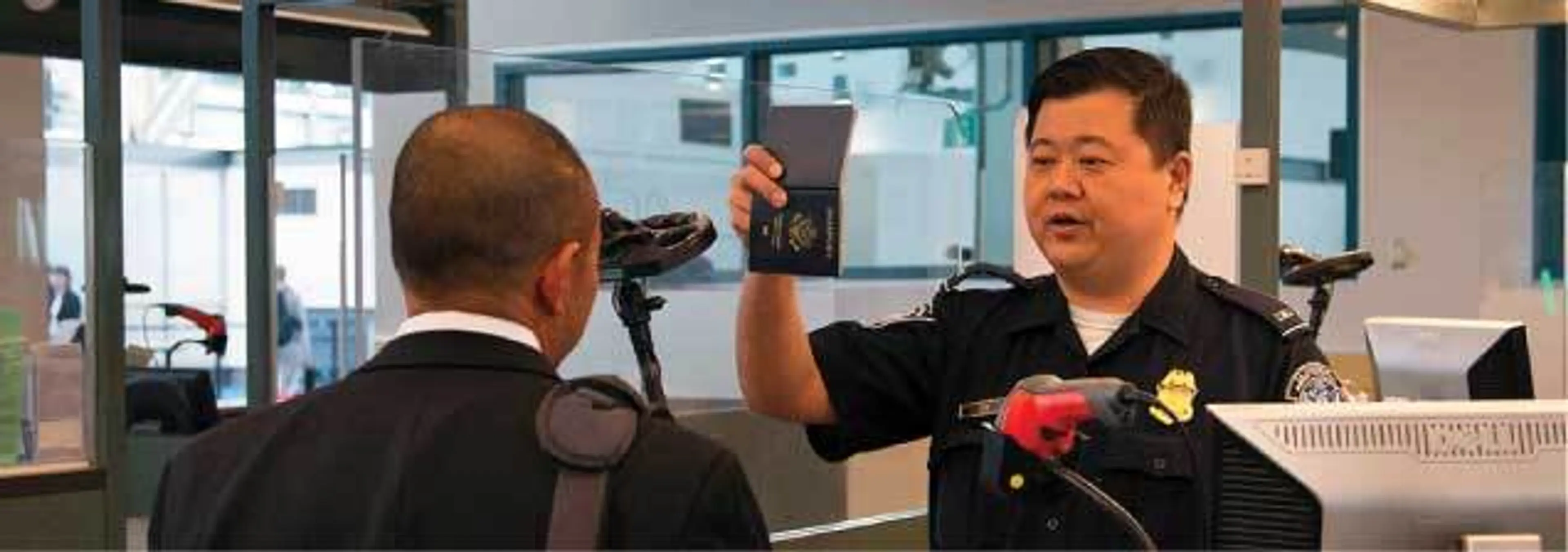
USCBP: Strengthening U.S. Borders with Intelligent Name Matching
How US Customs and Border Protection uses Babel Street Match
Explore solution components
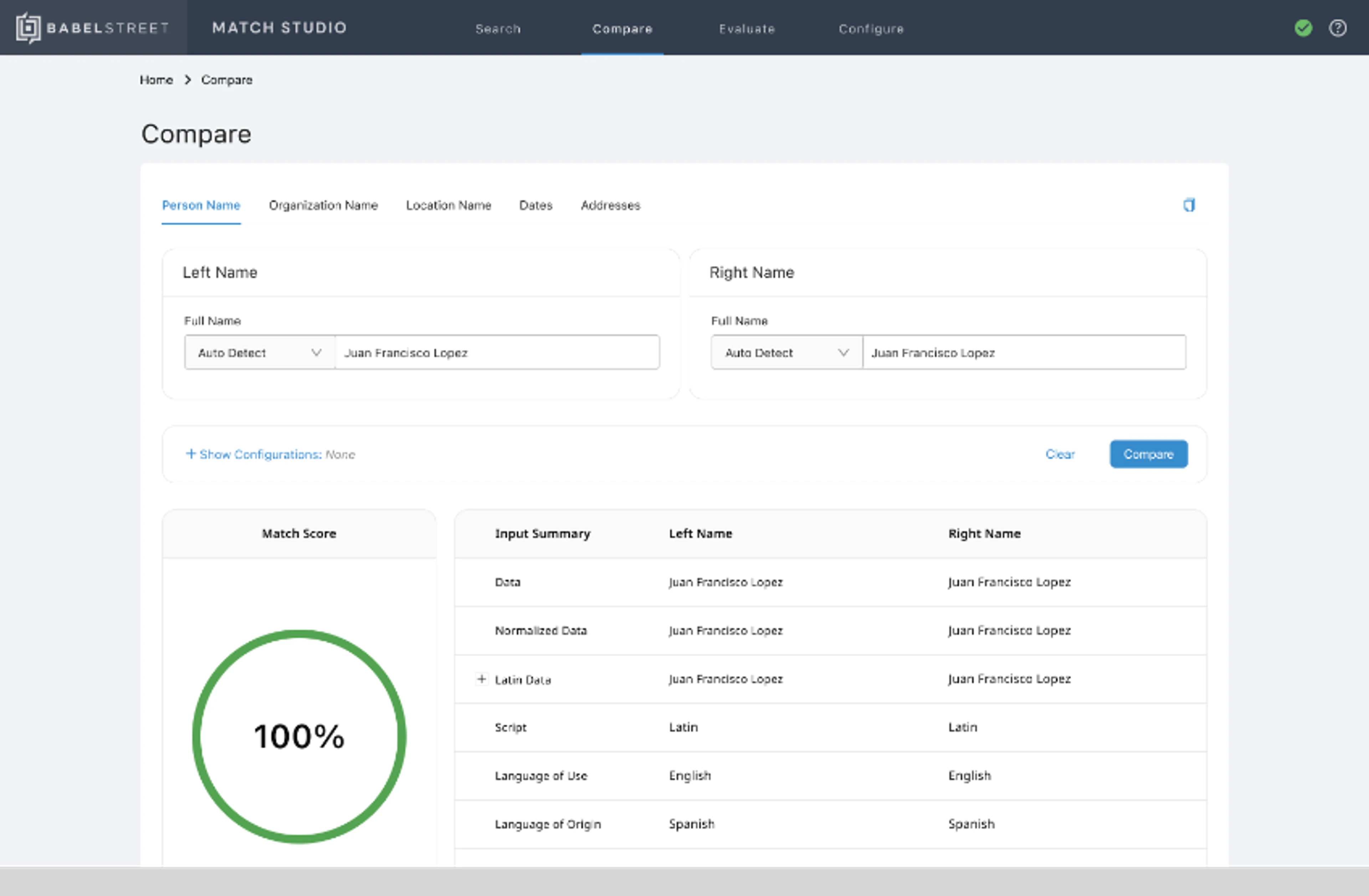
Match
AI-powered identity matching that accurately links names, addresses, and dates across languages — reducing false positives and enabling fast, explainable decisions in high-risk environments



Speak with an expert
Frequently asked questions
What is border screening?
Border screening is the process of evaluating travelers, cargo, and identities at points of entry to identify potential risks before they cross a national boundary. It uses biographic data, watchlists, and intelligence sources to verify identities and assess threat levels. Modern screening programs rely on automation, multilingual search, and entity resolution to improve accuracy and speed.
Why is border screening important for national security and public safety?
Border screening helps prevent dangerous individuals, contraband, and criminal networks from entering a country undetected. Without effective screening, agencies may miss persons of interest tied to terrorism, trafficking, smuggling, or cyber threats. Strong screening improves safety, protects critical infrastructure, and ensures lawful travel and trade.
What are the primary goals of border screening programs?
The primary goals include verifying identities, detecting high-risk travelers, assessing cargo and visa applications, and accelerating processing for trusted or low-risk individuals. Screening programs also aim to reduce false positives, improve operational efficiency, and ensure compliance with immigration and customs requirements. Ultimately, they strengthen national security while supporting legitimate movement across borders.
What types of threats are border screening designed to detect?
Border screening is designed to identify criminal networks, traffickers, smugglers, terrorists, and individuals using forged or deceptive identities. It also detects risks tied to drug trafficking, forced labor violations, illicit cargo, and transnational organized crime. Advanced systems can uncover aliases, transliterations, and complex identity variations that may conceal high-risk individuals.
What data sources are commonly used in border screening?
Common data sources include government watchlists, visa and passport databases, immigration and customs systems, social media intelligence, public records, and open-source information. Agencies also rely on multilingual public information feeds and regional data from hard-to-reach locations to close intelligence gaps. These diverse sources help build a complete, real-time picture of traveler and cargo risk.
How does border screening differ from customs screening and immigration screening?
Border screening focuses on identity verification and threat detection at the point of entry, identifying high-risk travelers, cargo, and networks before they enter the country. Customs screening centers on goods, tariffs, and contraband, while immigration screening evaluates visas, residency status, and eligibility to enter or remain in a country. Border screening often merges insights from both areas to strengthen overall security and compliance.
How do border screening systems identify high-risk individuals or entities?
Screening systems match identities against watchlists, visa records, public information, and multilingual data sources to detect aliases, transliterations, or deceptive identities. AI-powered matching helps uncover hidden connections, suspicious networks, and risk indicators within unstructured text and social content. This multi-layer approach enables more accurate, realtime risk assessment.
How is OSINT used to support border screening decisions?
OSINT provides near real-time insight into traveler behavior, affiliations, and potential threats by analyzing global news, public records, social media, and dark web sources. These signals help validate identities, highlight risk factors, and expose ties to criminal or extremist networks. OSINT enriches screening results, especially in cases where official data sources are incomplete.
What role does AI play in improving border screening accuracy and speed?
AI accelerates border screening by automating data enrichment — extracting locations, analyzing sentiment, classifying topics, and detecting violent intent across large datasets. It also enhances identity matching by handling misspellings, transliterations, aliases, and cultural name variations across languages. This reduces false positives, speeds processing, and improves decision accuracy for border officers.
What are common challenges in border screening (false positives, multilingual data, identity resolution)?
Border screening faces challenges like inconsistent traveler data, multilingual identity variations, and the risk of both false positives and missed matches. Agencies must also manage massive volumes of unstructured information and ensure accurate identity resolution across languages and scripts. AIpowered matching and data enrichment help overcome these obstacles by improving precision, context, and scalability.
What are the best border screening platforms for government agencies?
The best border screening platforms provide automated identity verification, multilingual data analysis, cross-lingual name matching, and real-time risk assessment. Babel Street’s Border Screening solution stands out by supporting traveler and cargo screening, visa vetting, and trusted traveler processing — all with advanced multilingual search and AI-powered enrichment. Its global data coverage, high accuracy entity resolution, and secure research environment make it a top choice for government agencies.
How does Babel Street support border screening and risk assessment workflows?
Babel Street enhances border workflows with automated bulk data enrichment, sentiment and violent intent analysis, entity resolution, and multilingual smart search. It helps officers quickly identify high-risk individuals, cargo, or networks by combining watchlist matching with OSINT-driven insights. The platform also supports visa screening, refugee background verification, and trusted traveler assessments through integrated risk scoring.
Can border screening tools integrate with watchlists and case management systems?
Yes, modern screening platforms, including Babel Street, are designed to integrate with government watchlists, visa systems, and case management platforms. This ensures seamless identity checks, consistent decision-making, and the ability to escalate high risk findings into investigative workflows. Integration also helps reduce redundant manual work and strengthens overall border security operations.
How does Babel Street reduce false positives and improve analyst efficiency?
Babel Street reduces false positives through multilingual matching that detects aliases, misspellings, and transliteration variations with high precision. AI-driven risk scoring and entity resolution eliminate noise in large datasets, helping analysts focus on credible threats. Automated enrichment, filtering, and smart search functions cut review times and increase operational efficiency.
What capabilities should we prioritize in a border screening solution?
Border agencies should prioritize:
- Real-time alerts and automated risk assessment to quickly flag high risk travelers and cargo.
- Multilingual analysis and cross-lingual matching to catch identity variations across languages.
- Secure, anonymous research environments to protect investigator identities.
- Entity resolution and AI-powered data enrichment to make sense of large volumes of unstructured text.
These capabilities ensure accurate, fast, and defensible border security decisions.