Building the Future of Agentic Risk Intelligence: Inside Babel Street’s 2026 Hackathon

By Gil Irizarry
What happens when engineers, data scientists, and product thinkers step away from roadmaps and come together to explore what’s next?
At Babel Street’s 2026 Hackathon, teams did exactly that, rapidly prototyping agent‑driven solutions to real, anticipated customer problems across national security, compliance, corporate risk, and investigative intelligence. The result was not a collection of disconnected experiments, but a coherent vision of how agentic risk intelligence can transform how organizations detect, understand, and act on risk.
Across dozens of projects, a clear theme emerged: the future of intelligence is agent‑led, adaptive, and collaborative, with humans firmly in control.
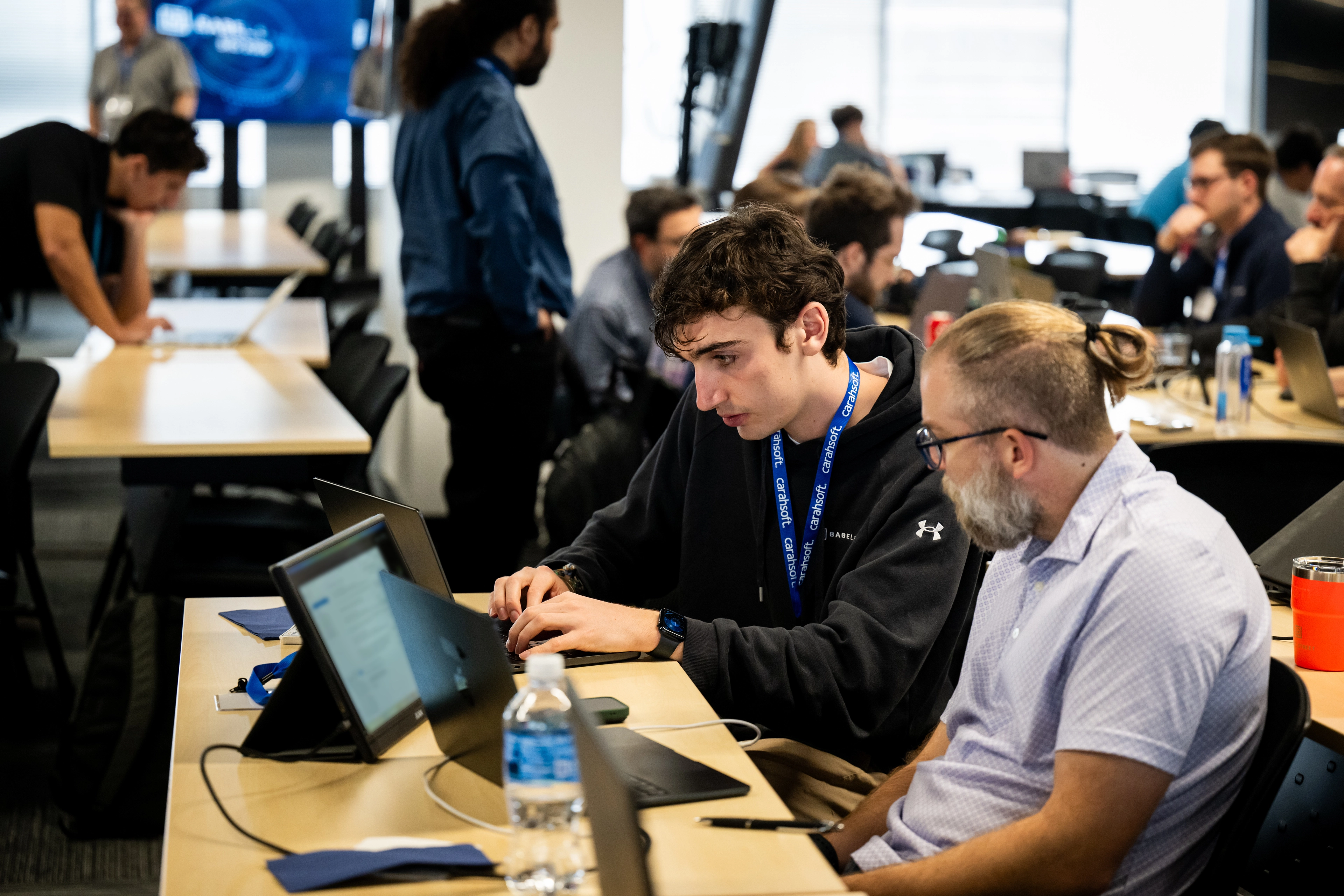
From data overload to agentic insight
Customers today are not struggling with a lack of data. They are overwhelmed by it.
Billions of documents, signals, and data points flow continuously from open sources, proprietary feeds, and internal systems. The challenge is turning that unstructured information into timely, actionable intelligence without relying on manual, brittle workflows.
Hackathon teams repeatedly tackled this problem by designing agentic systems that could:
- Decide which tools and models to use
- Extract meaning from unstructured content
- Correlate signals across time, geography, and entities
- Surface risk in context, not in isolation
- Present results visually and interactively
Rather than forcing analysts to configure every step, these solutions allowed agents to do the heavy lifting while analysts focused on judgment and decision‑making.
Agentic exploration of hidden risk
Several projects focused on uncovering risk that is often buried deep within massive datasets.
One set of solutions explored how agentic workflows could automatically triage large document collections, escalate only high‑signal content, and deploy specialized agents for extraction, geolocation, enrichment, and visualization. These approaches demonstrated how previously underutilized data archives could become self‑service intelligence platforms, enabling analysts to move from discovery to insight in minutes instead of days.
Other teams addressed maritime, sanctions, and supply‑chain risk, showing how agents could identify patterns such as hidden ownership structures or evasive behavior by correlating entities, locations, and timelines, then presenting those findings through interactive maps and graphs.
The common thread: agents acting autonomously to reduce noise, connect dots, and surface emerging risk before it becomes obvious.
Rethinking search, alerts, and monitoring
Traditional search and alerting systems often rely on static queries and manual review. Hackathon teams challenged that model.
Some projects reimagined search itself — allowing users to express intent in natural language while agents translated that intent into structured queries, geofences, and time filters. Others focused on context‑aware alerting, where agents monitored streams of OSINT data to detect behavioral patterns and escalation signals across multiple documents, rather than reacting to single posts or events.
These solutions pointed toward a future where alerts are not just triggered by keywords, but by agent‑detected risk trajectories, helping organizations act earlier and with greater confidence.

Graphs as living intelligence workspaces
Many teams converged on a powerful idea: the graph as a first‑class workspace.
Rather than static reports or flat lists of results, agents continuously built and expanded live knowledge graphs — connecting people, organizations, locations, properties, and events in real time. Analysts could steer investigations conversationally, explore relationships visually, and preserve the evolving graph as a durable intelligence artifact.
This approach reframes intelligence work from “search and retrieve” to collaborative exploration, where agents reason across sources and humans guide the investigation.
Scalable intelligence through small, specialized agents
Another important theme was efficiency and scalability.
Several teams demonstrated how small, specialized language models could handle targeted tasks — such as entity extraction or relationship mapping — at a fraction of the cost and latency of large models. By combining these lightweight agents with orchestration layers, teams showed how powerful new capabilities could be added without increasing operational overhead.
This reinforces a key principle of agentic design: the right agent, with the right tool, for the right job.
From events to situational awareness
Global risk rarely appears as a single event. It unfolds over time.
Hackathon projects addressing crisis and world monitoring focused on transforming raw event data into evolving situations. Agents extracted events from unstructured reporting, clustered related activity across geography and time, assessed severity, and highlighted emerging risks — all feeding into real‑time visual dashboards.
The result was a shift from reactive monitoring to proactive situational awareness, enabling decision‑makers to understand not just what happened, but what is developing.
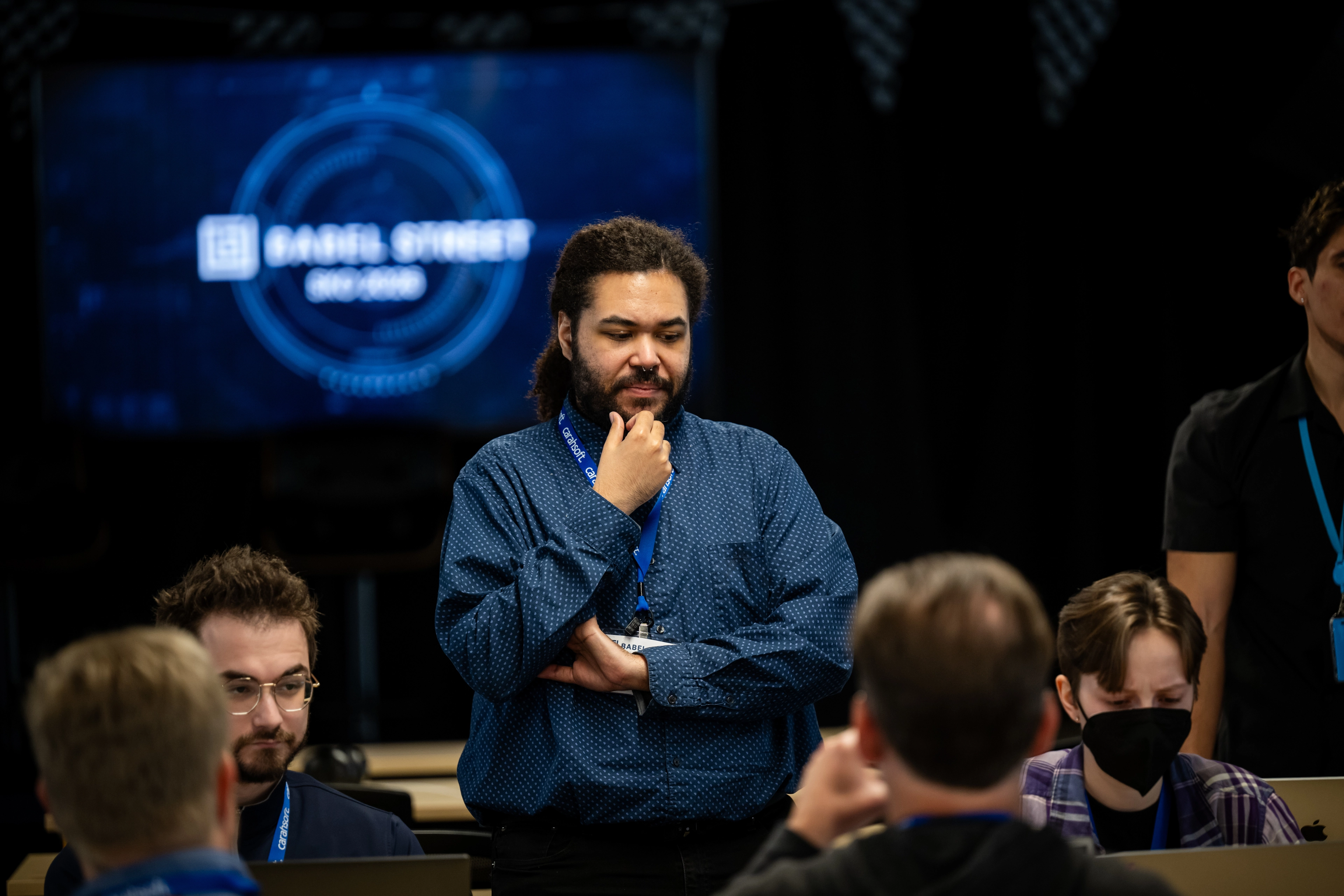
Innovation through collaboration
Perhaps the most important takeaway from the 2026 Hackathon was not any single prototype, but the way the work happened.
Teams formed across disciplines and geographies. Ideas evolved rapidly through collaboration. Agentic systems were not treated as replacements for human expertise, but as force multipliers for amplifying insight, speed, and scale.
What emerged was a shared vision of Babel Street’s future: a platform where agents and analysts work together, turning overwhelming data into trusted intelligence that helps customers anticipate risk, not just react to it.
Looking ahead
The projects built during the hackathon are not finished products — and that’s the point. They are signals of where risk intelligence is heading.
Agentic workflows. Human‑in‑the‑loop graphs. Adaptive monitoring. Scalable intelligence architectures.
Together, they demonstrate how Babel Street is continuing to push beyond traditional OSINT and analytics, toward a new generation of agentic risk intelligence designed for the complexity, speed, and uncertainty of today’s world.
We build cutting-edge risk intelligence solutions designed to make our world safer
Join a company full of exceptional people doing amazing things every day, not just in our Hackathon.
Published