Securing Tomorrow: How AI and Policy Are Transforming Defense Acquisitions and Supply Chain Security

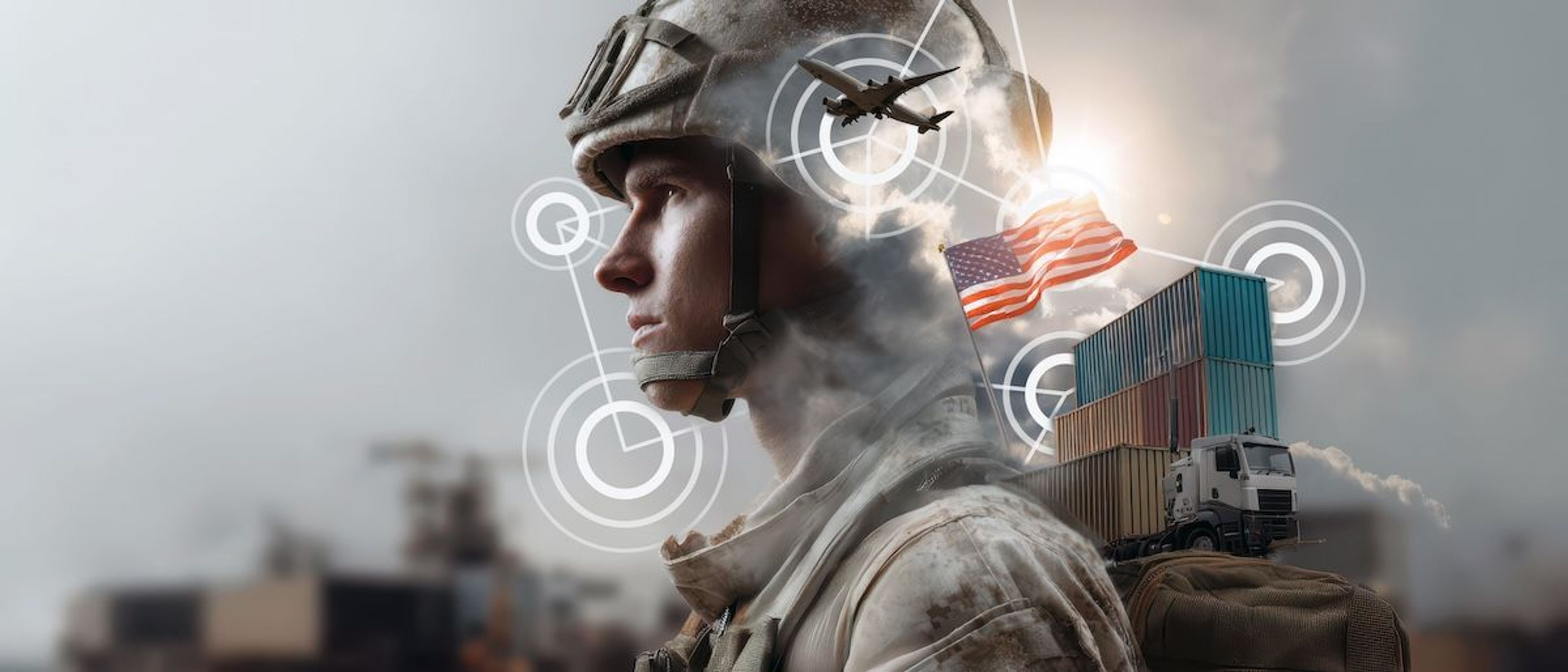
The United States faces a critical imperative: accelerate the delivery of advanced capabilities to warfighters while ensuring adversaries are kept out of the defense supply chain. Recent policy shifts — most notably a directive by the Department of War[1] to transform its acquisition system and the proposed Ernst amendment to the 2026 National Defense Authorization Act[2 ] — signal a new urgency and approach. At the heart of this transformation is the integration of cutting-edge technology to proactively vet vendors and predict adversarial involvement before it becomes a threat.
Drawing on insights from a recent expert webinar and the Department of War’s policy directive, this post explores how these changes are reshaping defense acquisitions, the role of AI in vendor vetting, and the path forward for a secure, resilient supply chain.
The policy mandate: speed, accountability, and security
The Department of War’s recent memorandum marks a decisive shift in acquisition philosophy. The directive redesignates the Defense Acquisition System as the Warfighting Acquisition System (WAS), with a singular focus: timely delivery of operational capabilities to the warfighter.
Layered atop these reforms is the Ernst amendment to the defense authorization act. This legislative mandate demands real-time, dynamic risk management and vendor vetting that can not only keep pace with adversarial tactics, but can help predict areas of risk. It specifically requires enhanced vetting of government vendors to prevent ties to the Chinese Communist Party (CCP) and other adversaries from entering the supply chain.
According to Jason English, SVP, Supply Chain Risk and Vendor Vetting Solutions at Babel Street, “Simple compliance is static in nature. It's informed by self-reported information that represents a point in time. By contrast, predictive risk intelligence is dynamic, and it's informed by data that’s not always apparent and may be intentionally hidden.”
The role of AI in vendor vetting: from compliance to prediction
Vendor vetting focuses on individual entities within a particular supply chain. Traditional approaches have relied on compliance reporting and static standards, which are ill-suited to the dynamic, adversarial environment of modern defense acquisitions and allow for only a reactive defensive posture.
AI-powered platforms can ingest and federate vast, disparate data sources — internal program data, global news, financial filings, corporate registries, sanctions lists, and social media — across multiple languages and modalities.
Capabilities of an AI vendor vetting solution typically include:
- Entity resolution: — Linking fragmented data across languages and aliases
- Pattern and anomaly detection — Identifying board members or beneficial owners spanning multiple companies
- Continuous monitoring — Flagging high-risk affiliations and ownership changes in real time.
- Knowledge graphs — Visualizing relationships between vendors and sanctioned entities
Together, these capabilities help analysts to see supply chain disruptions before they happen — allowing for preemptive action and resilience rather than simply reacting to incidents.
The benefits of predictive vendor vetting include:
- Mission assurance — Especially in defense and national security contexts where adversaries exploit supply chain vulnerabilities
- Auditability and accountability — Defensible audit trails help organizations demonstrate compliance and proactive risk management
- Resilience — By preempting risks, organizations can avoid cascading liabilities and ensure the integrity of their supply chains
Operationalizing the vision: practical steps and challenges
Webinar panelists had some targeted suggestions for organizations moving to embrace AI-driven vendor vetting:
- For policy makers — Specify accountable leadership, modular architectures, performance metrics, and incentives
- For acquisition professionals — Digitize and federate internal data to enable AI-driven insights
- For industry partners — Embrace transparency, continuous disclosure, and automation
Toward a secure, predictive, and agile defense supply chain
By operationalizing active verification, leveraging AI for proactive vendor vetting, and predicting adversarial involvement before it becomes a threat, the Department of War and its partners are building a supply chain that is not only efficient, but resilient and secure.
Webinar panelist Victor Minella, CEO Minella Global Strategies, summed it up: “The name of the game is operationalizing active verification. That’s the main thing. But we also can’t disrupt our defense industrial base along the way.”
End Notes
1. Department of War, “Memorandum for Senior Pentagon Leadership: Transforming the Defense Acquisition System into the Warfighting Acquisition System to Accelerate Fielding of Urgently Needed Capabilities to Our Warriors,” Nov 7, 2025 https://media.defense.gov/2025/Nov/10/2003819439/-1/-1/1/TRANSFORMING-THE-DEFENSE-ACQUISITION-SYSTEM-INTO-THE-WARFIGHTING-ACQUISITION-SYSTEM-TO-ACCELERATE-FIELDING-OF-URGENTLY-NEEDED-CAPABILITIES-TO-OUR-WARRIORS.PDF
2. Congress.gov, “S.2296 - National Defense Authorization Act for Fiscal Year 2026,” Retrieved Nov 19, 2025, https://www.congress.gov/bill/119th-congress/senate-bill/2296
Published