From Battlefield to Boardroom: Why "Mission-Grade" Intelligence is the New Standard
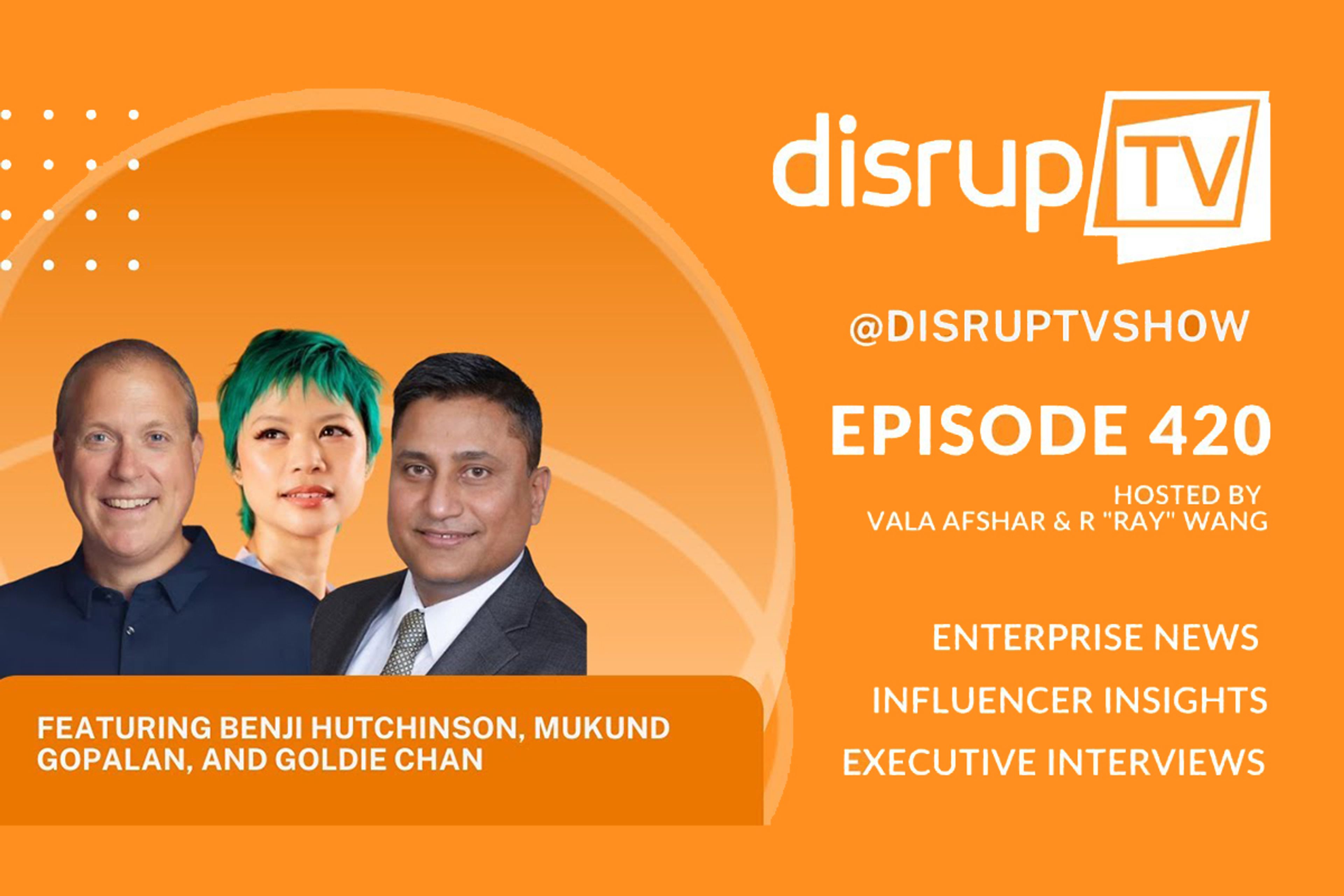
The hosts of DisrupTV, R "Ray" Wang and Vala Afshar, sat down with Benji Hutchinson, CEO of Babel Street, for a critical conversation about the digital war being waged against modern enterprises.
As a global leader in "Mission-Grade Risk Intelligence," Hutchinson brought a sobering message to the show: the threats that once defined national security — nameless, faceless actors operating in the shadows — are now targeting the Fortune 2000. And frankly, most companies aren’t ready.
Here are the top takeaways from DisrupTV Episode 396.
1. The convergence of threats (dual-use technology)
For decades, the defense sector and the commercial world operated in silos. The military had its tools; banks and corporations had theirs. Hutchinson argues that this era is over.
"The threats that we experienced during the Global War on Terror are some of the same threats that companies experience today," Hutchinson explained. Whether it’s a terror cell or a financial fraudster laundering billions, the adversary uses the same tradecraft: dark web operations, shell companies, and obfuscated networks.
Because the threats have converged, the technology must follow suit. "Mission-grade" means bringing battle-tested, military-spec intelligence capabilities into the commercial enterprise.
2. The ~30% reality check
When asked what percentage of Fortune 2000 leaders truly understand and utilize this level of intelligence, Hutchinson’s answer was stark: "I wouldn't say it's more than 30%."
Despite having billions of dollars at risk, many large organizations still rely on "AI 1.0" tools or simple manual searches to vet threats. Hutchinson warned that while many leaders consume high-level intelligence content, their operational workflows lack robustness. In a world of complex, globalized risk, relying on basic "homegrown solutions" is a liability that Boards can no longer afford.
3. The 20-minute vulnerability test
One of the most striking moments in the interview was Hutchinson’s confidence in finding gaps in legacy systems. When asked how quickly he can expose a company's blind spots, he didn't say weeks or days.
"In the first 20 or 30 minutes... we can demonstrate vulnerabilities," Hutchinson stated.
This creates a terrifying contrast for the enterprise:
- The adversary — Operating at machine speed, using AI to obfuscate identities and move money instantly.
- The enterprise — Often relying on human analysts to manually sift through data — a process that takes days.
Hutchinson points out that "Mission-Grade" tech can perform identity resolution across 200+ languages in seconds. If your risk assessment takes longer than your coffee break, you are already behind the curve.
4. The rise of "agentic AI"
Perhaps the most exciting insight from the interview was the shift away from the traditional "single pane of glass" dashboard.
"We obviously see AI disrupting everything," Hutchinson noted. We are moving toward agentic AI — autonomous agents that perform the heavy lifting of data sifting 24/7. Instead of analysts burning out while staring at filters, the future workflow looks different.
As Hutchinson described it, you come in, have your coffee, and ask your AI agent: "What did you find in the last 24 hours?" The agent handles the deterministic work, allowing human decision-makers to focus solely on the critical insights.
The litmus test: Is your risk intel “Mission-Grade”?
Hutchinson estimates that 70% of major enterprises are still operating with “AI 1.0” or manual tools. To determine if your org is truly ready for the digital war ahead, ask your security leadership these four questions.
- The search engine test — Are your analysts using standard search engines or basic news aggregators to ‘hunt’ for threats?
- The identity resolution gap — If a name is misspelled or uses a variation in Arabic, Russian, or Mandarin, will your system catch it instantly?
- The “coffee” standard — When your team arrives in the morning, do they start by filtering data, or do they start by reading a summary from an AI agent?
- The Cayman shell game — Can you instantly map the relationship between a vendor, their board members, and a shell company in a tax haven?
Watch the full interview on DisrupTV:
Published