Supplier Vetting is Key for Supply Chain Risk Management
For much of human history, supply chains were simple. Ingredients grew locally, materials were abundant nearby, and members of the local community consumed finished products.
No more.
Today, governments and large businesses regularly depend on global, interconnected ecosystems of manufacturers, distributors, and logistics companies to source raw materials, component parts, and finished goods. Businesses depend on the stability and resiliency of these supply chains. So do the military and other government agencies. But supply chain complexities too often shield suppliers from scrutiny, obfuscating supply chain risks.
This is a potentially catastrophic problem. Governments contracting with the wrong suppliers risk giving adversarial nations access to national defense systems, telecommunications systems, and power grids — rendering these systems vulnerable to espionage, sabotage, or shutdown. Businesses may suffer from increased costs, decreased quality, and the inability to get their goods or services to market on time. Both public and private entities risk contracting with providers whose business practices run afoul of established legal and ethical standards.
Supply chain risk arises from several factors:
- Political instability interrupts the free flow of goods both within affected countries and internationally. Instances of political instability include war, regional trade disputes, strikes and political uprisings.
- Cyberattacks target the digital inventory tracking, order management, and distribution systems on which modern supply chains depend. These attacks, along with outages and other technological disruptions, also present an opportunity for the theft of intellectual property.
- Pandemics and other natural disasters can slow operations and lead to a shortage of materials or resources. If a stay-at-home order prevents workers from mining minerals, those minerals cannot be shipped to the organizations that need them. Similarly, hurricanes, tornados, and other natural disasters can demolish manufacturing sites, halting production.
- Supplier finances and policies can disrupt trade. Is a much-needed supplier teetering on the edge of bankruptcy? Is it able to provide its goods in the quantity needed by the purchasing organization? Is it able to meet spikes in demand? Does it comply with prevailing environmental, social, and governance (ESG) standards?
To combat supply chain disruptions, organizations need thorough supplier vetting as part of a holistic supply chain risk management program.

Learn the basics

Data Sheet
Babel Street Vendor Vetting Solution
How the components of the Babel Street Platform can be used for vendor vetting and supply chain risk mitigation.
Blog
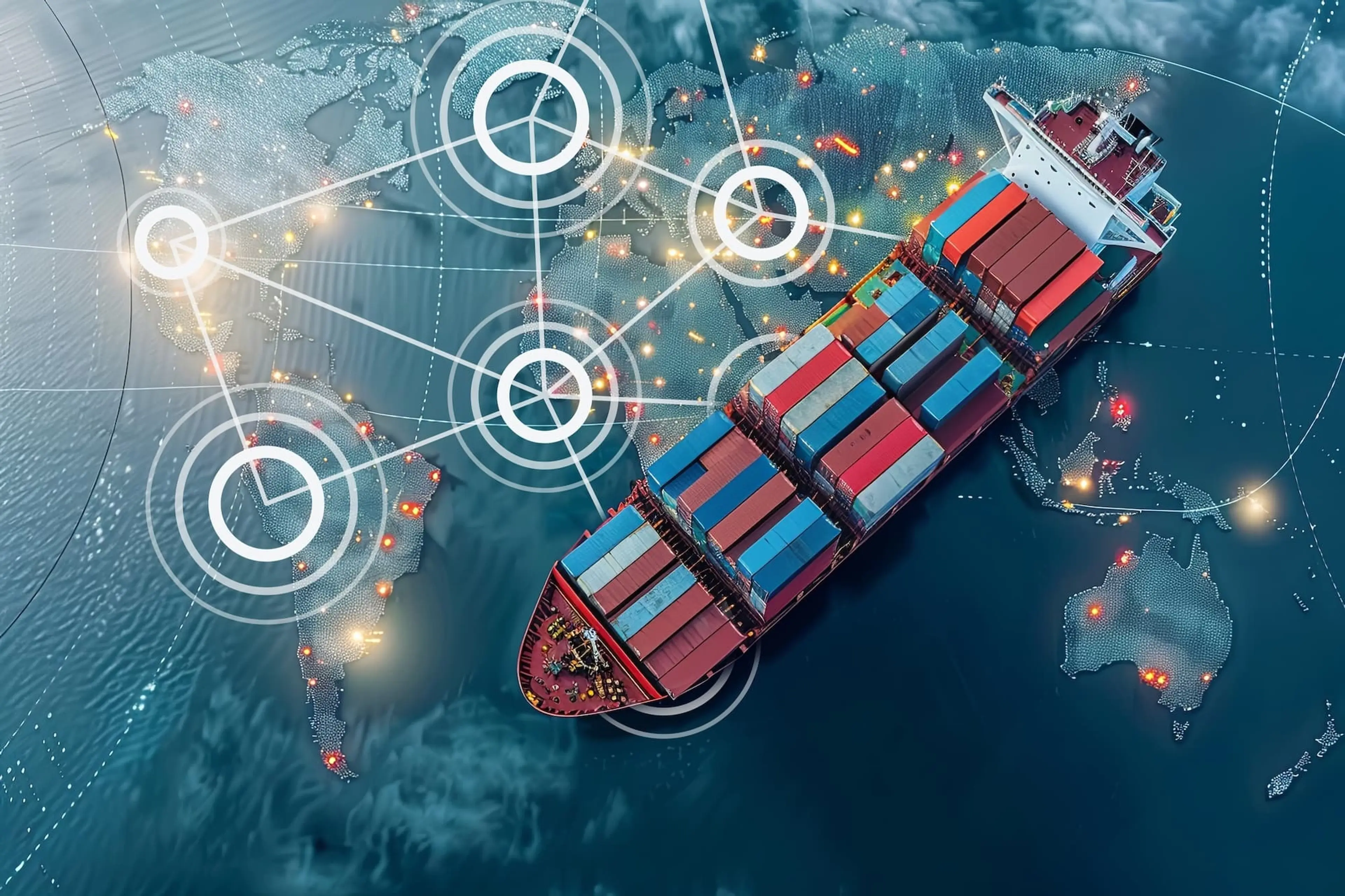
Supply Chain Risk Management: Mitigating the Risk of Contested Logistics
What is contested logistics? When one considers the headlines that dominated in 2024, one of the key themes was the Houthi campaign of attacks against civilian...

Blog
Understanding Vendor Vetting for Business and Government
Today’s businesses and governments rely on a complex web of vendors and suppliers to deliver products and services. While this interconnectedness offers efficie...
Webinar
Navigating Contested Logistics: Proactive Risk Mitigation for Resilient Supply Chains
What is supply chain risk management?
The U.S. Office of the Assistant Secretary of Defense for Sustainment defines supply chain risk management (SCRM) as “the process of proactively identifying supply chain vulnerabilities, threats, and potential disruptions,” and “implementing mitigation strategies to ensure the security, integrity, and uninterrupted flow of materials, products, and services.”[1]
Supply chain risk management solutions are vital to both governments and businesses. Typically, a complete SCRM solution consists of:
- Identification — Detecting potential threats to the supply chain.
- Assessment and prioritization — Evaluating the likelihood of a risk being realized, then prioritizing risks in order of potential impact.
- Scenario planning — Developing “what if” scenarios to test an organization’s resilience to disruption. This process includes the development of contingency plans.
- Vendor/supplier vetting — Evaluating suppliers’ financial health, regulatory compliance, affiliations, and ability to deliver. This work protects government data and the national infrastructure from the threats inherent in complicated supply-chain ecosystems. It ensures the steady flow of goods and services. It mitigates potential risks ranging from operational disruptions to security breaches. It helps prevent attacks from cascading across entire supply chains.
- Continuous monitoring — Deploying systems that provide near real-time alerts of emerging situations that could affect the supply chain.
- Resiliency planning — Developing contingency plans to help governments and businesses quickly respond to supply chain disruptions and ensure continuity of operations.
Supply chain risk management processes are important for resiliency in the face of commonplace disruptions. Somewhere in the world, a hurricane will close a port. Somewhere else, workers will strike for improved pay, affecting a company’s ability to fulfill orders. But SCRM grows even more vital in areas known for contested logistics.
Understanding contested logistics
“Contested logistics” is a term used to refer to the challenge of sustaining governmental/military or commercial operations in environments where the movement of resources is deliberately and actively opposed by an adversarial force.
Consider this. Up to 12% of the world’s trade passes through the Red Sea, much of it through the Suez Canal.[2] Beginning in late 2023, the Houthi, an armed Yemeni political group, used drones, missiles, and explosive-laden remote-control boats to attack commercial ships in that waterway.[3] As a result, many shipping and container-transport companies had to reroute their vessels around Africa, adding weeks to delivery times and increasing costs.
Houthi attacks are not isolated incidents. Russian incursions against supply chains keep Ukraine from receiving vitally needed goods. Intelligence communities worry that the infrastructure elements of China’s Belt & Road initiative could serve as staging points for attacks against supply routes.


Supplier vetting: A vital SCRM component
As noted, creation of a holistic SCRM solution is a multi-disciplinary effort, requiring everything from risk identification to the development of supply chain contingency plans.
Supplier vetting is a vital part of this process. Supplier vetting is the act of investigating potential suppliers before entering a business relationship, and periodically thereafter. The best supplier vetting solutions use AI-powered data analytics and a global network of data sources to help users assess risks. These sources include public records filings, business registration records, social media, and adverse media. Analyses provide insight on a supplier’s ability to deliver goods and services in a secure, legal, and timely manner.
Many businesses and government agencies already undertake some type of supplier vetting. But they’re caught in a conundrum. Consider the government procurement arena. If agencies select a risky supplier, they could be giving adversarial nations access to national defense systems, telecommunications systems, power grids, and more. However, if agencies take too long to vet companies, they delay essential procurement. This delay can cause operational inefficiencies and weaken mission readiness.
Businesses and governments need speedy, accurate supplier insight. But they are too often hampered by imprecise legacy systems that leave organizations unable to confidently contract with the businesses they need, when they need them. These systems typically offer only limited visibility into ownership and control. They often rely on self-reported data. They may read only English-language sources of information. Unable to reliably separate insight from a sea of data, they too often return vast amounts of inconsequential information that business or agency personnel spend too much time analyzing.
Governments and businesses need supply chain risk management technology sophisticated enough to spot those individuals and corporations that present a true risk, while eliminating the need for manual review of vast amounts of false “insight.”

Why Babel Street?
Improve decision making and safeguard national security with the Babel Street Risk Intelligence Platform. With its ability to automate discovery, improve the speed and quality of supplier analyses, and consolidate risk intelligence, the Babel Street solution can be embedded into the supply chain threat mitigation processes currently used in defense, government, and commercial organizations.
Our solution provides clients with an integrated pipeline of advanced AI-powered analytics, along with unparalleled access to unique data sources. Babel Street integrates comprehensive threat information with proprietary business data — including corporate intelligence, firmographics, and government restrictions lists. As part of our solution, organizations can combine these capabilities with unparalleled business risk collections. These collections provide deeper insight into foreign government procurement data, financial data, and business registries — further aiding in the assessment of questionable suppliers and contested industries. Always-on monitoring alerts users when new information arises for each search term.
Babel Street fuels the detection of aliases across languages and contexts. This detection is critical for optimized supplier vetting. Suppliers — particularly those allied with adversarial nations — too often obscure their ownership to bypass sanctions and gain unauthorized access to government supply chains or restricted markets. Babel Street combats these obfuscations by combining our extensive data-collection capabilities with advanced multilingual name matching. We identify company name variations and additional identifiers often overlooked in English-centric databases – expertly matching names in Mandarin, Russian, Farsi, and other non-Latin scripts.
Anonymity is important to supplier vetting. Babel Street searches are conducted in a protected virtual environment. This environment enables corporations and agencies to analyze online sources without risking the organization’s infrastructure or compromising their own identities.
By searching and continuously monitoring diverse data sources worldwide, Babel Street’s offering helps governments and businesses to proactively identify supplier risks — a vital component of any SCRM solution.
Endnotes
[1] Office of the Assistant Secretary of Defense for Sustainment, “Supply Chain Risk Management Framework Project Report – Phase I,” Feb 2023, https://www.acq.osd.mil/asds/log/docs/DoD_SCRM_Framework_Report_Phase_I.pdf
[2] García-Vazquez, Gilberto, “Suez Canal: Engineering Marvel And Crisis Chokepoint, Observation of Economic Complexity,” accessed May 2025, https://oec.world/en/blog/suez-canal
[3] project44, “Houthi Attacks Disrupt Global Supply Chains,” September 2024, https://www.project44.com/supply-chain-insights/houthi-attacks-on-container-vessels-prompt-carriers-to-avoid-bab-al-mandeb-strait/
Frequently asked questions
What is supply chain risk management (SCRM)?
Supply chain risk management (SCRM) is the process of proactively identifying, assessing, and mitigating vulnerabilities and threats across governmental, military, and commercial supply chains. SCRM protects the national infrastructure and sensitive data while ensuring the secure, reliable, and uninterrupted flow of goods and services. It encompasses risk identification, scenario planning, supplier vetting, continuous monitoring, and resiliency planning.
Why is SCRM a critical issue?
Modern supply chains are global, complex, and highly interconnected. While this enables efficiency and scale, it also obscures visibility into suppliers, ownership structures, and dependencies.
What are the most common sources of supply chain risk?
Supply chain risk arises from:
- Political instability, including wars, trade disputes, strikes, and uprisings
- Cyberattacks targeting digital supply chain systems and intellectual property
- Pandemics and natural disasters that halt production or transportation
- Supplier financial instability, capacity constraints, or noncompliance with environmental or regulatory mandates
What role does supplier vetting play in supply chain risk management?
Supplier vetting is a foundational component of SCRM. It entails investigating suppliers’ ownership, financial health, regulatory compliance, geopolitical ties, and ability to deliver goods and services securely and reliably. Effective supplier vetting helps prevent hidden foreign influence, sanctions evasion, fraud, and operational disruptions.
Why are traditional supplier vetting approaches often insufficient?
Legacy vetting systems frequently rely on self-reported data, English-only sources, and static point-in-time checks. They offer limited visibility into complex ownership structures, foreign affiliations, and evolving risks—forcing organizations to manually review large volumes of low-value information while missing critical threats.
How does Babel Street support SCRM and supplier vetting?
The Babel Street Risk Intelligence Platform provides AI-powered supplier vetting capabilities that integrate seamlessly into existing SCRM workflows. It combines advanced analytics with global, multilingual data sources to deliver actionable insights into supplier risk, ownership, affiliations, and compliance — while reducing the need for manual research and review.
What makes Babel Street’s supplier vetting capabilities different?
Babel Street excels at:
- Multilingual name matching and alias detection across Latin and non-Latin scripts
- Identifying hidden ownership and foreign influence
- Integrating proprietary business intelligence with global risk and threat data
- Providing always-on monitoring with real-time alerts