
Babel Street Identity Intelligence and Organization Screening
Identity and organization screening operations are vital for governments, law enforcement, and businesses alike. For any situation requiring accurate and efficient identity intelligence, Babel Street provides the AI, analytics, and advanced matching technologies to address complex screening challenges.
Gain security with identity screening solutions

Protect National Security
Accurate screening by government agencies helps thwart terrorism, detect insider threats, and secure borders

Stop Financial Crime & Stay Compliant
Screening for politically exposed persons (PEPs), sanctions, and adverse media helps prevent money laundering, corruption, and legal consequences

Manage Vendor Threats
Conducting due diligence, verifying credentials, and continuously monitoring vendor activities helps identify and mitigate vendor-related risks

Investigate Domestic and International Crime
Resolving entities across languages can reveal hidden connections and new investigational pathways

Reduce False Alarms
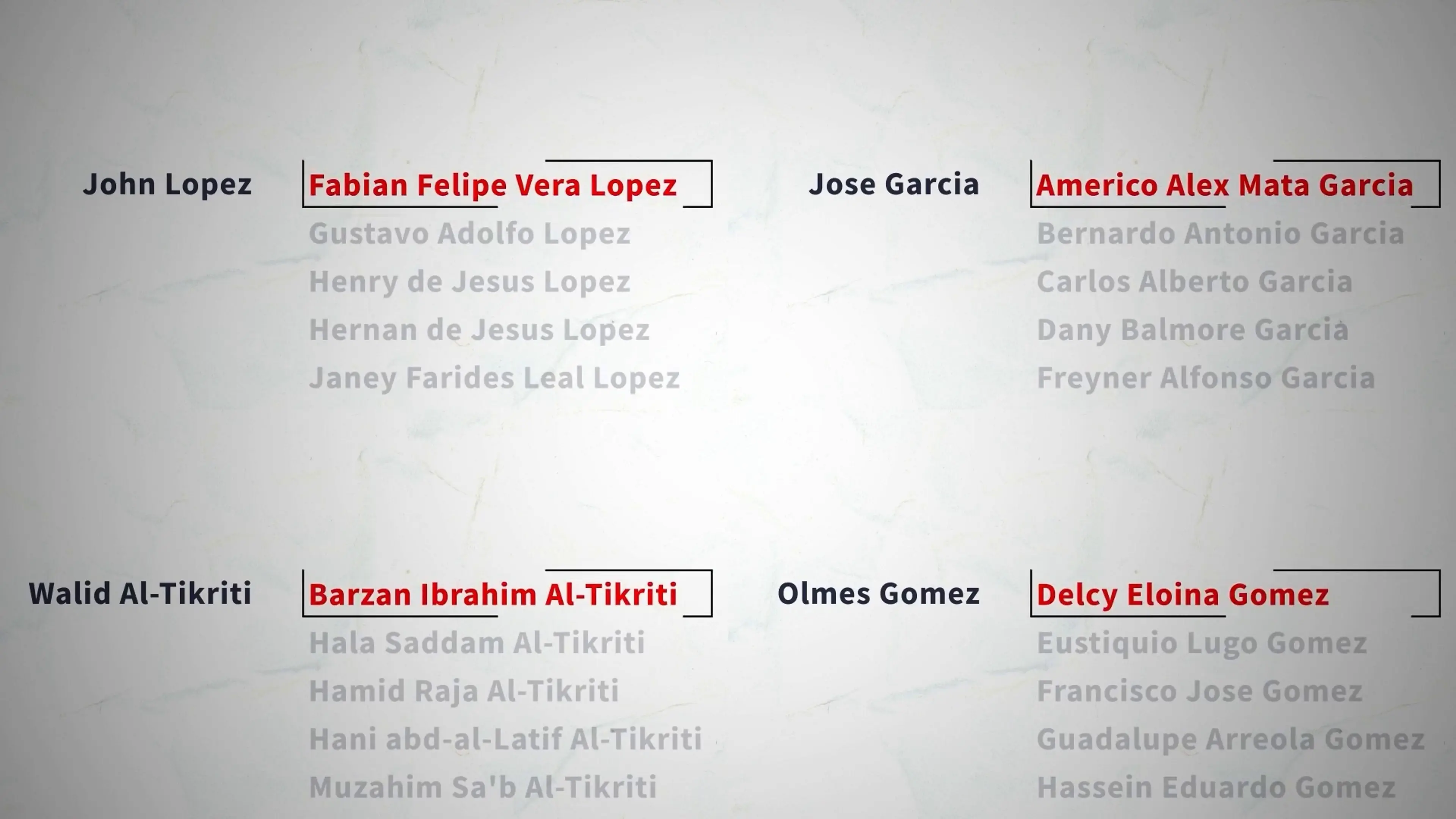
Advanced matching algorithms decrease false positives and negatives — saving time and improving accuracy

Drive Consistent Results
AI and automation ensure efficiency and consistency in screening and decision-making
Identity Intelligence - See it in action

Case Study
Babel Street Strengthens Denied Party Screening for Global Shipper
How a global shipper uses Babel Street Name Translator to increase accuracy and matching of non-Latin script names

Use Case
Using Babel Street in the Fight Against Counterfeit Goods
How Babel Street helps detect and prevent illicit trade of counterfeit goods.

Use Case
Using Babel Street to Streamline KYC/KYV Processes
How Babel Street applies to AML, KYC, and KYV compliance

Use Case
Using Babel Street for Continuous Vetting of Federal Employees and Contractors
How Babel Street can help with continuous evaluation and monitoring of employees and contractors
Explore intelligence solutions components
Match
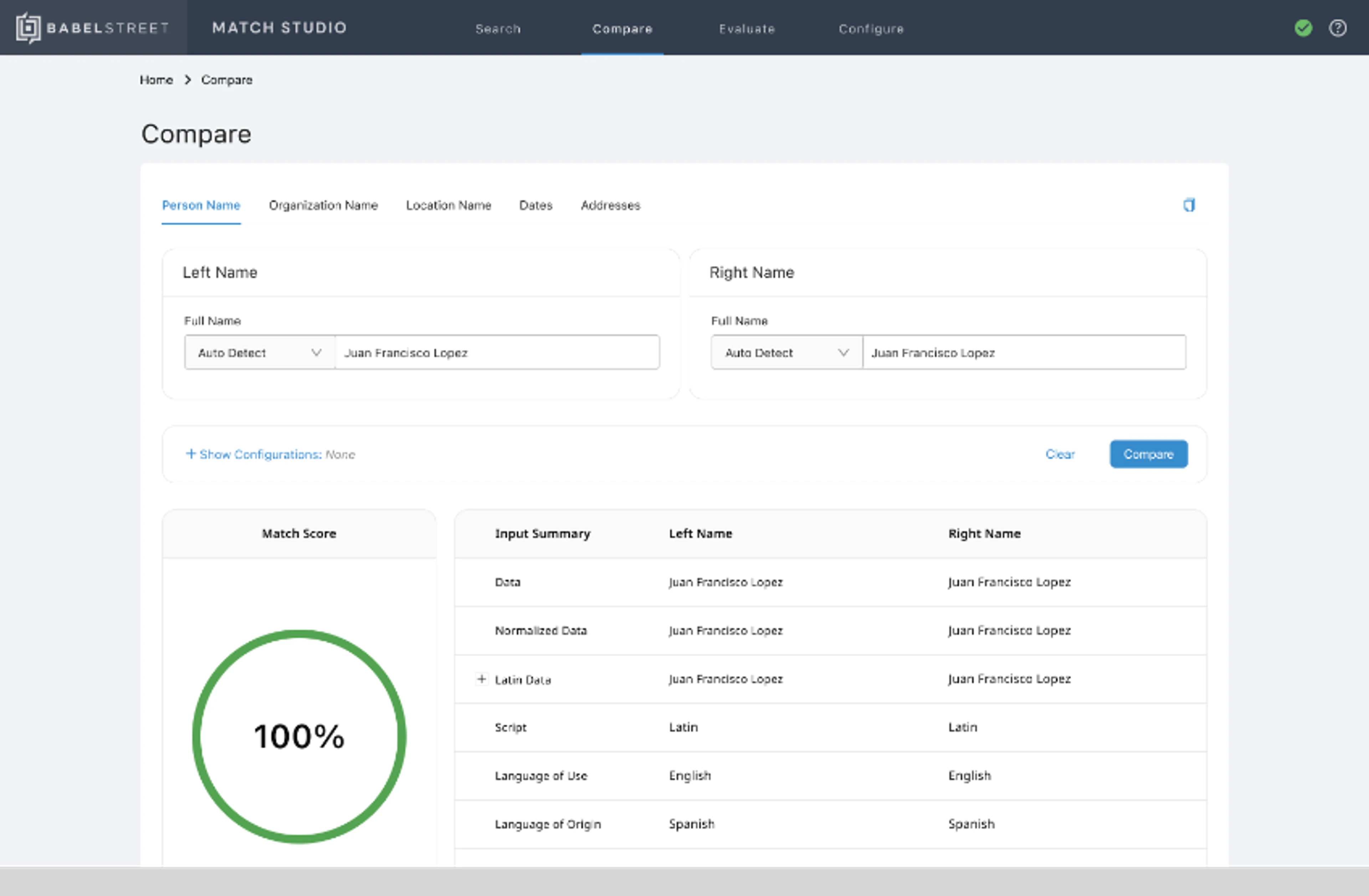
AI-powered identity resolution solution that accurately matches names, addresses, dates, identifiers, organizations, and complete identity records across languages and scripts


Identity screening - Try it yourself or speak with an expert
Frequently asked questions
What is identity screening?
Identity screening is the process of checking individuals or organizations against trusted data sources to verify identity and identify potential risk. It helps determine whether a person or entity is associated with sanctions, criminal activity, or other risk indicators. Identity screening is commonly used in compliance, security, and onboarding workflows.
Why is identity screening important for compliance and risk management?
Identity screening is critical for meeting regulatory requirements and preventing fraud, financial crime, and security threats. It enables organizations to identify high-risk individuals or entities before granting access, approval, or services. Effective screening reduces regulatory exposure and operational risk.
What is the difference between identity screening and background checks?
Identity screening focuses on matching individuals or organizations against watchlists, sanctions lists, and risk indicators. Background checks are typically broader and may include employment history, education, and criminal records. Screening is often automated and ongoing, while background checks are usually point-in-time.
What types of watchlists are used in identity screening?
Common watchlists include sanctions lists, politically exposed persons (PEP) lists, criminal and law enforcement lists, and regulatory watchlists. These lists help organizations identify individuals or entities that may pose legal or security risks. Watchlists are often combined with adverse media sources for deeper context.
What industries require identity screening?
Industries that commonly require identity screening include financial services, government, law enforcement, aviation, healthcare, and global trade. These sectors must verify identities to comply with regulations, protect assets, and ensure safety. Identity screening is essential wherever trust and access decisions are high risk.
How do identity verification companies use government databases for screening?
Identity verification companies use government databases to validate identity attributes and screen against official watchlists and records. These sources help confirm legitimacy and identify potential compliance risks. Government data is often combined with commercial and public sources for accuracy.
How do businesses conduct mass identity screening?
Businesses conduct mass identity screening by using automated screening tools that process large volumes of names against multiple data sources simultaneously. AI-driven matching and entity resolution help handle name variations and multilingual data at scale. This enables efficient, high-volume screening without manual review bottlenecks.
How does identity screening work in KYC and AML workflows?
In KYC and AML workflows, identity screening is used during onboarding and ongoing monitoring to match individuals or organizations against watchlists, sanctions lists, and adverse media sources. Screening results feed into risk scoring and determine whether enhanced due diligence or investigation is required. Accurate identity screening helps teams meet regulatory requirements without slowing onboarding.
What is the difference between sanctions screening and identity screening?
Sanctions screening focuses specifically on identifying matches to government sanctions lists. Identity screening is broader and includes sanctions, PEPs, watchlists, adverse media, and other risk indicators. Sanctions screening is a subset of identity screening within compliance workflows.
How do identity screening tools reduce false positives?
Identity screening tools reduce false positives by using advanced name matching, entity resolution, and confidence scoring rather than simple rules-based matching. AI-driven approaches distinguish between similar names, incomplete records, and true risk. This significantly lowers manual review volume and improves consistency.
How does identity screening handle name variations and multilingual data?
Modern identity screening tools handle name variations by recognizing transliterations, spelling differences, aliases, and cultural naming conventions. Multilingual processing allows screening across different scripts and languages without manual translation. This capability is critical for global KYC and AML programs.
What data sources are most important for identity screening?
Key data sources include sanctions and watchlists, PEP lists, government records, adverse media sources, and commercial risk databases. These are often enriched with public and multilingual data to provide context. Using multiple sources improves screening accuracy and defensibility.
What is the best identity screening solution for global enterprises?
The best identity screening solutions for global enterprises combine high-accuracy name matching, multilingual support, scalable automation, and seamless compliance integration. Babel Street’s Identity Risk Intelligence solution is designed for global scale, enabling organizations to screen individuals and organizations accurately across languages, regions, and data sources. This supports consistent, defensible screening worldwide.
How does Babel Street support identity and organization screening?
Babel Street supports identity and organization screening through AI-powered name matching, entity resolution, and risk enrichment across individuals, companies, and networks. Its platform connects structured and unstructured data to surface relevant risk indicators beyond simple list matching. This enables more accurate screening and investigation outcomes.
Can Babel Street integrate identity screening into compliance operations?
Yes — Babel Street integrates identity screening into existing AML, KYC, KYV, and compliance operations through its modular, API-first architecture. Organizations can enhance current workflows without replacing legacy systems. This integration improves screening accuracy while maintaining operational continuity.
How does Babel Street support cross-border screening and due diligence?
Babel Street supports cross-border screening by processing multilingual data, handling name variations and transliterations, and accessing global public and commercial sources. This allows organizations to screen individuals and entities consistently across jurisdictions. The result is stronger due diligence for international customers, vendors, and partners.
What makes Babel Street’s identity screening solution different from competitors?
Babel Street differentiates itself through explainable AI, industry-leading multilingual name matching, and the ability to unify identity, risk, and contextual intelligence in one platform. Unlike rules-based or single-source tools, Babel Street reduces false positives while maintaining auditability and regulatory confidence. This delivers more accurate decisions at enterprise scale.