AI Risk Management for the AI-on-AI Era
Organizations face risks that move across identities, businesses, supply chains, digital networks, and geopolitical events faster than manual processes can track. AI risk management uses artificial intelligence to continuously find relevant signals, connect hidden relationships, investigate potential exposure, and deliver evidence teams can use to make defensible decisions.
The Babel Street Agentic Risk Intelligence Platform brings together rights-cleared global data, governed AI agents, and an AI-native investigation experience to help government and commercial organizations identify identity, vendor, and strategic threats at mission speed. Analysts remain in control of investigative scope, validation, and final decisions.
What is AI risk management?
AI risk management is the use of artificial intelligence to identify, investigate, assess, monitor, and help mitigate risks across large, complex, and changing data environments. It enables organizations to analyze more information, connect signals across sources and languages, continuously evaluate changing relationships, and prioritize potential threats for human review.
AI risk management can refer to two related disciplines:
- Managing risks created by AI, including model bias, privacy, security, governance, and regulatory compliance.
- Using AI to manage organizational risk, including identity fraud, sanctions exposure, vendor and supply-chain vulnerabilities, geopolitical instability, criminal activity, and emerging threats.
Babel Street supports this second discipline while incorporating the governance, transparency, provenance, and human oversight required for high-stakes AI use.

Learn the basics

Blog
AI Risk Assessment: Illuminating Risk Before It Escalates
How AI risk assessment reveals hidden connections, detects emerging threats, and supports faster, more confident risk intelligence decisions.

Data Sheet
Babel Street Insights Investigator
Feature brief about the agentic AI experience inside Babel Street Insights.

Blog
Navigating the AI-on-AI Era: Introducing Insights Investigator for Agentic Risk Intelligence
Accelerate investigations with agentic AI. Insights Investigator transforms intent into structured workflows and delivers validated intelligence faster.
Video
How Insights Investigator Conducts Research, Analysis, and Reporting
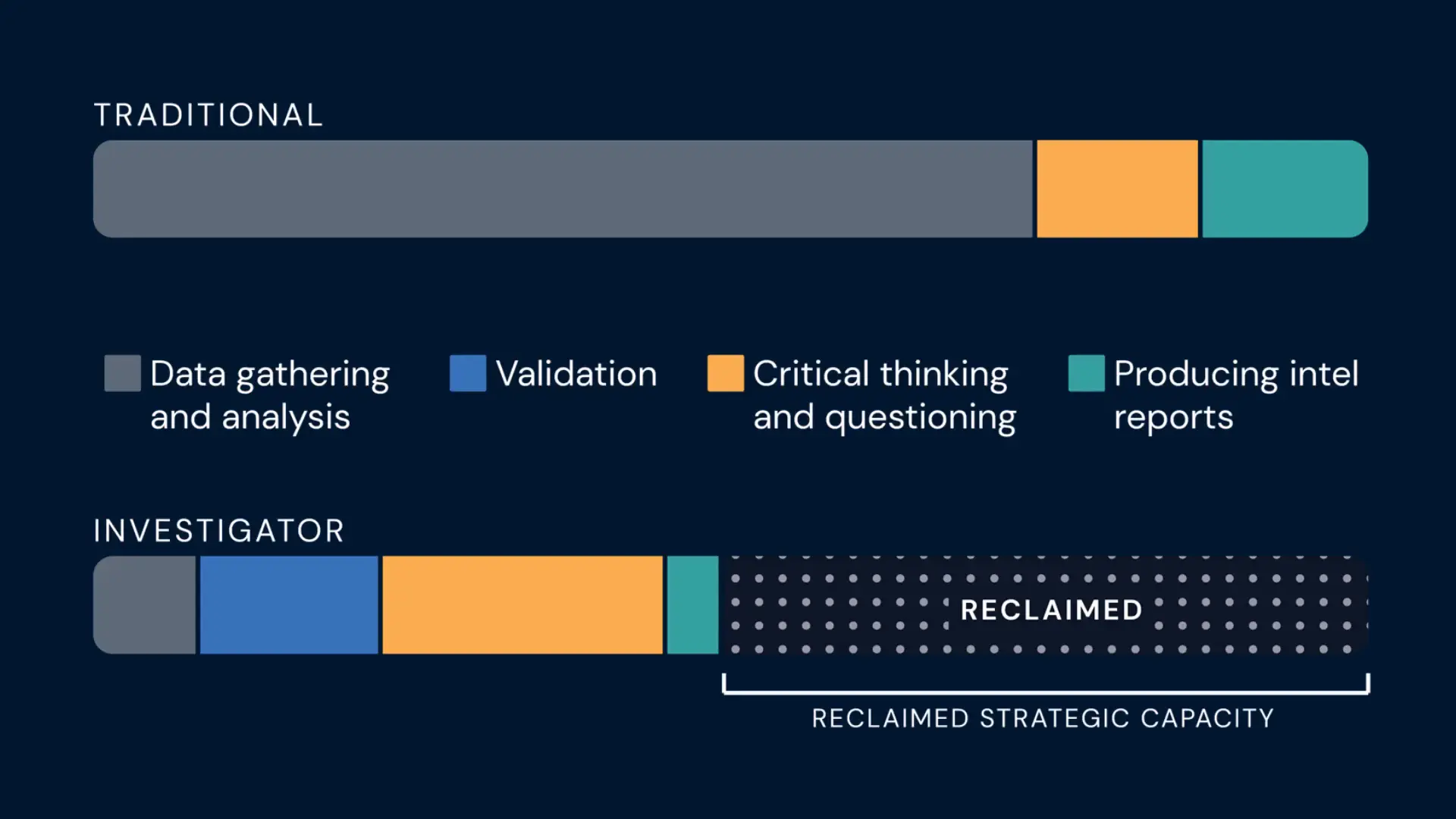
How Babel Street Insights Investigator uses AI-powered investigation workflows to help teams uncover risks faster and produce mission-ready intelligence in seconds.
Why traditional risk management no longer keeps pace

Risk is continuous, not periodic
A vendor, person, or organization may appear low risk during onboarding but change because of new ownership, sanctions activity, adverse reporting, geopolitical events, or newly discovered affiliations. Periodic reviews create gaps between the moment risk changes and the moment a team detects it.

Risk is relational
A subject may not appear risky in isolation. Exposure can emerge through owners, subsidiaries, affiliates, suppliers, infrastructure, digital accounts, operating locations, or historical relationships. Effective AI risk management must evaluate proximity to risk, not simply assign a static score.

Risk crosses languages and data environments
Threat indicators appear across local news, corporate records, social platforms, sanctions data, public information, commercial datasets, and deep and dark web sources. Language, script, transliteration, slang, and coded terminology can obscure critical connections.

AI has changed the threat
Nation state actors, organized criminal groups, and other adversaries can use AI to scale deception, create synthetic identities, accelerate influence operations, and probe supply chains. Organizations need governed AI operating at comparable speed and scale under human control to effectively address these threats.
How AI improves risk management through automation and intelligence
AI improves risk management by automating labor-intensive research, analyzing information at greater scale, revealing relationships that may not be apparent in isolated records, and continuously monitoring for material changes. The strongest agentic risk intelligence systems do not simply produce a risk score. Using a repeatable process, they provide the context, evidence, and traceability needed to understand and act on the risk.
- Ingest global data — Collect relevant signals across public, commercial, proprietary, and organizational sources.
- Structure unstructured information — Extract people, organizations, locations, events, identifiers, and other entities from text and media.
- Resolve identities and entities — Connect names, aliases, accounts, organizations, and records across languages and scripts.
- Identify relationships and risk proximity — Reveal ownership, affiliation, influence, supply-chain, geographic, and historical connections.
- Investigate and validate — Use AI agents to execute approved research plans, pursue multiple lines of inquiry, challenge assumptions, and organize source-backed findings.
- Monitor and act — Track changing conditions, alert teams to relevant developments, and integrate findings into existing investigative, compliance, security, or procurement workflows.
What is agentic AI risk management?
Agentic AI risk management uses governed AI agents to execute multi-step risk research and investigation workflows under human direction. Instead of requiring an analyst to run every query individually, agents can develop and carry out a research plan, connect relevant information, test investigative paths, and organize evidence for review.

How does agentic risk intelligence compare with traditional risk tools and generative AI?
| Traditional risk tools | Generative AI assistants | Agentic risk intelligence |
|---|---|---|
| Depend heavily on static rules and periodic assessments | Primarily respond to individual prompts | Execute multi-step workflows toward an approved objective |
| Often produce scores or isolated alerts | Can summarize information but may obscure sources or reasoning | Connect identities, entities, relationships, events, and evidence |
| Require analysts to manually move between systems | Depend on the information available to the model | Use governed tools and rights-cleared risk data |
| Can leave data and workflows siloed | May generate plausible but unsupported answers | Produce source-backed findings with visible provenance |
| Support narrow, predefined tasks | Require repeated human prompting | Adapt research as evidence emerges within analyst-defined controls |
| Human effort remains concentrated on collection | Human review often occurs only after an answer is generated | Humans direct scope, approve plans, validate evidence, and make decisions |
AI risk management powered by agentic risk intelligence
Babel Street provides an operational framework for AI-powered risk management. Our Agentic Risk Intelligence Platform combines rights-cleared global data, multilingual intelligence, analytics, governed AI agents, and source-backed investigative workflows in an extensible platform.
Data Advantage™
AI risk management is only as reliable as the data and context supporting it. Babel Street Data Advantage transforms global content into connected risk intelligence, helping teams resolve entities, expose relationships, understand proximity to risk, and preserve provenance.

AI risk management use cases: identity, vendor, and strategic threats

IDENTITY RISK INTELLIGENCE
Who are we dealing with?
Use AI to resolve people, organizations, aliases, digital entities, and records across sources and languages. Applications include:
- AML, KYC, and sanctions screening
- Fraud investigations
- Border and immigration security
- Law-enforcement investigations
- Insider-risk investigations
- Identity verification and continuous vetting
VENDOR RISK INTELLIGENCE
Who are we doing business with?
Use connected intelligence to investigate companies, beneficial owners, affiliates, suppliers, foreign influence, adverse reporting, and changing exposure. Applications include:
- Third-party due diligence
- Supply-chain security
- Beneficial-ownership analysis
- Foreign ownership, control, or influence investigations
- Government contractor screening
- Continuous vendor monitoring


STRATEGIC THREAT INTELLIGENCE
What matters next?
Use AI to connect global signals, developing events, people, organizations, and locations to detect risks earlier and provide decision context. Applications include:
- Geopolitical risk
- Protective intelligence
- Event and venue security
- Executive protection
- Influence operations
- Crisis response and situational awareness
Turn connected intelligence into defensible decisions
AI risk management helps organizations move beyond periodic checks and isolated alerts to investigate connected, continuously changing risks. By combining rights-cleared global data, multilingual analysis, entity resolution, and governed AI agents, the Babel Street Agentic Risk Intelligence Platform supports identity risk, vendor risk, and strategic threat investigations. Source-backed findings give teams the context and traceability needed to make defensible decisions, while human analysts remain in control of investigative scope, validation, and final action.
Ready to connect intelligence into defensible decisions?
Learn more about AI risk management

White Paper
What Makes AI Research Trustworthy
An answer can be cited, grounded, and still be wrong. Trustworthy AI requires stronger evidence, better verification, and analysts who remain in control.

Data Sheet
Babel Street Data Advantage™ Overview
Reveal hidden risk through connected intelligence, entity resolution, and global data context.

Data Sheet
Babel Street APIs
Babel Street APIs deliver global data, analytics, and identity intelligence for faster decisions

Blog
Spy Hard: Why Better Data Leads to Better Intelligence
How qualified data, provenance, credibility, and entity resolution improve AI-powered intelligence, OSINT investigations, and threat analysis.
Frequently asked questions about AI risk management
What is AI risk management?
AI risk management is the use of artificial intelligence to identify, investigate, assess, monitor, and help mitigate risks. It enables organizations to analyze large volumes of data, connect relevant signals, reveal hidden relationships, and prioritize potential threats for human review and action.
How is AI used in risk management?
AI is used to collect and analyze information, extract entities, resolve identities, map relationships, detect anomalies, identify emerging risk signals, automate investigative research, and continuously monitor for changes. Human analysts validate findings and remain responsible for consequential decisions.
What is the difference between AI risk management and AI risk governance?
AI risk management can describe using AI to identify and manage organizational risks. AI risk governance focuses on controlling risks created by AI systems themselves, including bias, privacy, security, explainability, and regulatory compliance. Effective AI-powered risk management requires both operational capability and strong AI governance.
What is an AI risk assessment?
An AI risk assessment uses artificial intelligence to evaluate potential exposure by analyzing data about people, organizations, relationships, events, assets, and changing conditions. Unlike a static risk score, an advanced AI risk assessment can provide evidence and context explaining why a subject may present risk.
What is agentic AI risk management?
Agentic AI risk management uses governed AI agents to execute multi-step research, monitoring, and investigative workflows. Agents perform approved tasks and adapt research as evidence emerges, while people control objectives, permissions, validation, escalation, and final decisions.
How is agentic AI different from traditional AI in risk management?
Traditional AI usually performs a defined task, such as classification, matching, or scoring. Agentic AI coordinates multiple tasks toward a broader objective. It can plan research, use tools, investigate relationships, follow new leads, and assemble evidence within human-defined controls.
How does Babel Street support AI risk management?
The Babel Street Agentic Risk Intelligence Platform combines rights-cleared global data, multilingual analytics, identity resolution, governed AI agents, and source-backed investigative workflows. It supports identity risk, vendor risk, and strategic threat intelligence while keeping analysts in control of decisions.
How does Babel Street maintain human oversight?
Analysts define investigative objectives, review research plans, guide execution, inspect sources, and validate findings. They retain authority over scope, conclusions, escalation, and final decisions. The AI accelerates the work but does not replace accountable human judgment.
Can AI risk management support continuous monitoring?
Yes. AI can continuously evaluate new information, ownership changes, sanctions activity, adverse reporting, geopolitical developments, and newly visible relationships. This helps teams identify material changes between scheduled assessments.
What risks can the Babel Street platform help organizations investigate?
Babel Street supports investigations involving identity and fraud risk, sanctions and compliance exposure, vendor and supply-chain risk, hidden ownership and foreign influence, geopolitical threats, protective intelligence, criminal networks, and other emerging risks across government and commercial environments.
Can Babel Street integrate with existing enterprise systems?
Yes. Babel Street provides APIs that allow organizations to incorporate global data, identity matching, text analytics, and risk intelligence into existing applications and workflows without replacing every established system.